Allen Ross comments at Bible.org on “The Necessity Of Bearing Fruit”:
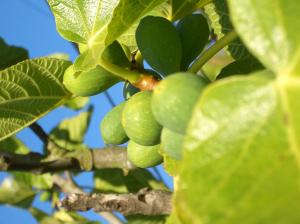 It was a little early in the year for the harvest of figs, since this occurred during the holy week, which in 33 A.D. was the last week of March. But Mark tells us that there were leaves on the tree, and fig trees produce leaves and figs about the same time–this was early growth. The early figs are edible, but not as good as the figs that are harvested in June. The point is that the presence of leaves indicates there should be fruit. When Matthew says that he found only leaves, the readers would have known there should have been figs. If this had taken place at the normal time of figs, Jesus could have simply gone to another fig tree. But this was an unusual early growth, and as Jesus was hungry, expected he could pick some fruit from it.
 The question then is often raised as to why Jesus would curse a tree that was not supposed to be in season. Well, the action was symbolic. The point is that the leaves on the tree advertized that there were figs there as well, but it was a false advertisement. Jesus used this to teach a memorable lesson: the tree was cursed not just because it was not bearing fruit, but because it was making a show of life that promised fruit but delivered none. What Jesus intended by this acted parable was that those who make a show of being religious but in fact are spiritually barren will be cursed. In this context it would apply directly to Israel, but it applies to all people who produce no evidence of genuine spiritual life. This teaching harmonizes with the previous account of the cleansing of the temple, and prepares for the messages to come (Matt. 23). The Jewish leaders in the context of Matthew are the primary targets, for they advertised piety without producing true righteousness.
It is interesting to note that Jesus’ miracles about cursing are directed at things other than people–the drowning of the pigs (8:28-34), and now the cursing of the fig tree. The warning is clearly for people to heed; but the way it is presented is indirect. Yet the message is clear: those who claim to be pious better produce the fruit of righteousness or they too will fall under the Lord’s judgment.
 Knowing God through His Word ... Day by Day
20090811.1115p
Did you know that the fig tree tells us when the crucifixion happened? The Holy Spirit revealed to us (plural) that Jesus was crucified on August 17. I heard this revelation in 1983 but it was only from 1999 to 2003 that I checked whether there is any ring of truth in it or not. True enough, the revelation is correct. Today, I posted a blog relating the parable of the fig tree to the crucifixion. Please read my blog. Your comments are most welcome.